Commission News & Services
January 2026
All Tri-Municipal Sewer Commission meetings are accessible via videoconference through Microsoft TEAMS. All meetings will be held at the Tri-Municipal Wastewater Facility, 345 Sheafe Road, Wappingers Falls, at 9:00 A.M. Contact Tri-Municipal Sewer Commission at 845-297-5750 or christine@trimuni.org or karen@trimuni.org for link, log-in or dial-in information.
If there are any changes to the above list, all will be notified by the Assistant Administrator.
2026 Notice of Video Conferencing for Regular Monthly Meetings
January 8, 2026
February 12, 2026
March 12, 2026
April 9, 2026
May 14, 2026
June 11, 2026
July 9, 2026
August 13, 2026
September 10, 2026
October 8, 2026
November 12, 2026
December 10, 2026
We're a NYS Approved Compost Facility!
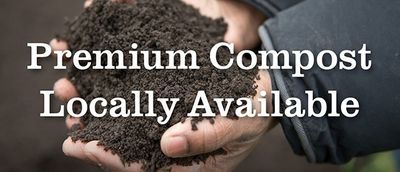
COMPOST AVAILABLE (call 845.297.5622 for information)
We now offer Premium Local Compost for sale to approved purchasers and vendors.
NYS Department of Envornmental Conservation Permitted
NYS DEC has permitted the Tri-Municipal Sewage Treatment Plant to operate as an
Organic Recycling Facility in Dutchess County.
The system is operated by Inframark - (formerly Severn Trent) 845.228.0460
(Capacity B: 250 dry tons/yr 120 B dt)
Bio-Solid Reuse through Composting
Composting involves the aerobic decomposition of organic material, such as biosolids, using controlled temperature, moisture, and oxygen levels. Composting results in a humus-like material that is typically used in landscaping to enhance topsoil. All composting methods are aimed at optimizing conditions for microorganisms to efficiently degrade the material. Bulking agents such as sawdust, woodchips, or leaves are added to the biosolids to absorb moisture, increase porosity, and add carbon. The mixture is stored (in windrows, static piles, or a vessel) for a period of intense decomposition. Following this active period, the material is stored for an additional period to cure prior to use. We offer approved businesses our premium local Organic Compost in Poughkeepsie and surrounding areas.
Beneficial Use
There are many methods for beneficial use of biosolids including direct land application, composting, chemical stabilization, and heat drying.
Direct land application of biosolids is the placement on or in the soil to benefit the crop grown and the soil present. Application can occur on agricultural land, forest land, and for land reclamation. Biosolids are used because they provide nutrients (nitrogen and phosphorus) and organic matter to the soil and plants grown. Biosolids can be applied as a semi-solid (dewatered) material, similar to manure. Biosolids are spread onto the soil surface and then incorporated into the soil. The application rate is determined by the crop grown and the nutrient content of the biosolids.
How We Process
In addition to the separation process, we use heat drying as a treatment process in which almost all water is removed from biosolids.
The chemical composition of the biosolids remains essentially the same but the percent of solids of the resultant material is 90 percent or greater.
Depending on the system, the end product is a significantly lighter material . The heat dried product is typically used directly as a fertilizer or blended with other material to produce a higher grade fertilizer.